
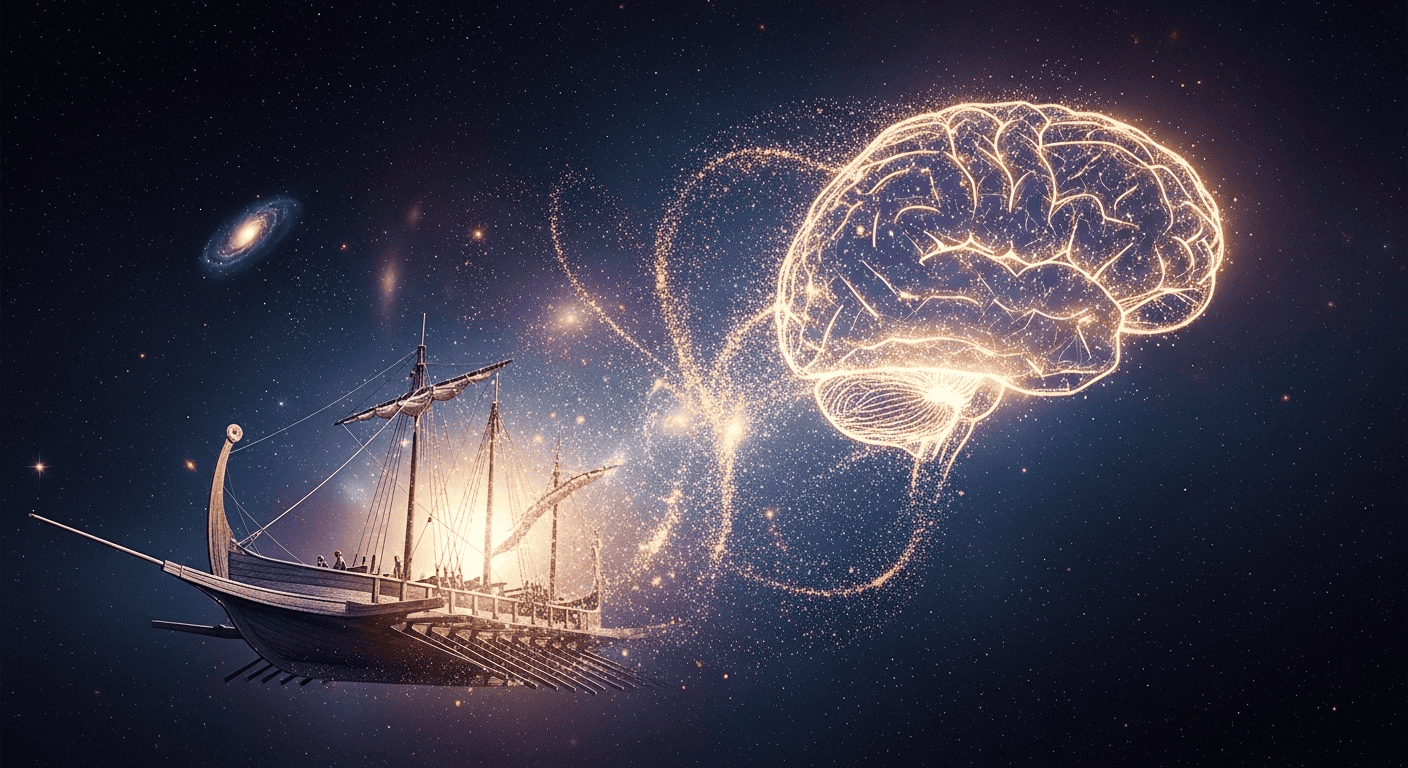
Over two millennia ago, the ancient Greek historian Plutarch left posterity a puzzle that seemed to have no solution:The Ship of Theseus.
The protagonist of the story is a legendary warship moored in the port of Athens. It belonged to Theseus, the hero who slew the Minotaur. To commemorate his great deeds, the Athenians maintained the ship year after year, regarding it as a symbol of the city-state’s glory. However, time is relentless, and the sea erodes. The ship’s wooden planks inevitably began to decay. And so, the people replaced the first rotted plank with a new, sturdy piece of oak.
This process, like a slow farewell, continued for centuries. An old mast was taken down, a torn sail was discarded, a rotten oar was replaced. Then one day, a disquieting philosophical question emerged with the thunderous removal of the last original plank: Is this ship, now composed entirely of new materials, still the ship of the hero Theseus?
If the answer is yes, then where does its “identity as a ship”—that unique essence that makes it what it is—reside? It is clearly no longer in the matter that constitutes it. If the answer is no, then at what precise moment did it die? When the first plank was replaced? Or the fiftieth? Or the very last?
To complicate matters further, if someone were to reassemble all the discarded old planks at the other end of the port, we would be faced with two ships: one pristine and new, the other battered and ancient. At this moment, which one is the true “Ship of Theseus”?
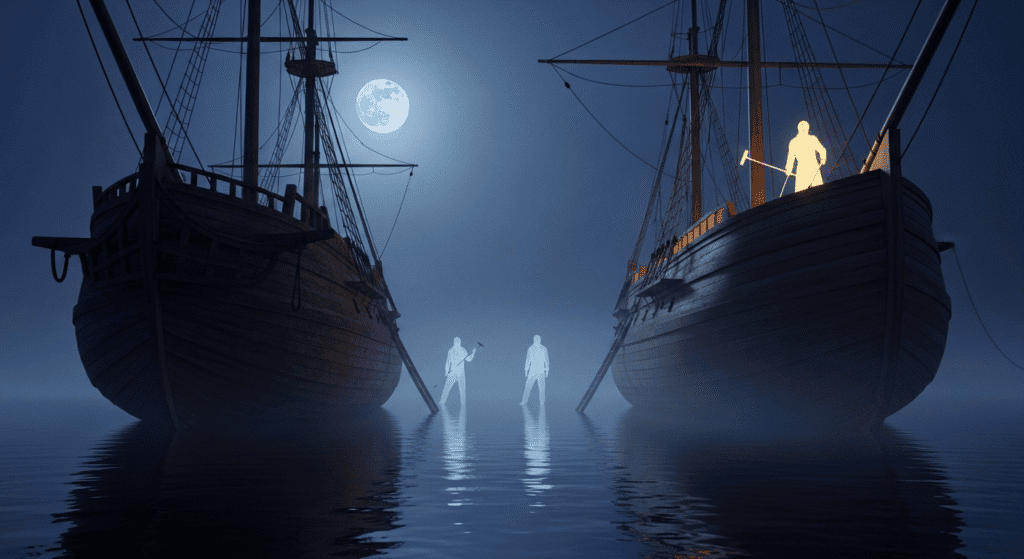
This ancient thought experiment, with its elegant cruelty, reveals the fragility of identity in the torrent of time. Generations of philosophers have attempted to provide answers. Some have proposed “nominalism”, arguing that the ship’s identity lies in its name and form; thus, as long as the name “Ship of Theseus” remains, its identity is preserved, regardless of how its parts are replaced. Others have adhered to “materialism”, asserting that identity is rooted in its material composition; from this perspective, as the ship’s parts are gradually replaced, its identity changes, for its material makeup is no longer the same as it was initially. Still others have suggested “process theory”, believing that identity lies in its history and the processes related to it; according to this view, as the ship’s parts are replaced, its identity also evolves, for its history and processes have changed.
However, for two thousand years, no single answer has managed to quell this eternal debate. The reason this seemingly simple, yet perpetually unsolved, ancient puzzle holds an irresistible fascination for each of us is not merely because it is an interesting riddle. More importantly, it is because each of us, it seems, is that Ship of Theseus.
The identity crisis of the Ship of Theseus is, equally, the identity crisis of every one of us: Who am I? Or, what am I?
In response to this question, some might offer their names, but a name itself is merely a representative symbol. Usually given by parents or other close relations, it holds no intrinsic meaning. We can change our names at any time, or add new ones, without affecting our essence in the slightest. A name is simply a symbol bound to a person at the linguistic or textual level, created for the needs of expression, and irrelevant to our fundamental nature.
Many might believe that the entire body, wrapped in its clothes, is who they are. This definition seems more accurate, yet it is fraught with significant problems. Throughout our lives, our physical bodies are in a constant state of renewal. It is said that in about seven years, the matter constituting your body will be completely replaced. From a material standpoint, the you of today has almost no connection to the you of seven years ago. Is the you of this moment the same person as the you of seven years ago? If not, where did the current you come from? And where did the you of seven years ago go? If you still consider them to be the same person, it implies that our physical body has little to do with our essence.
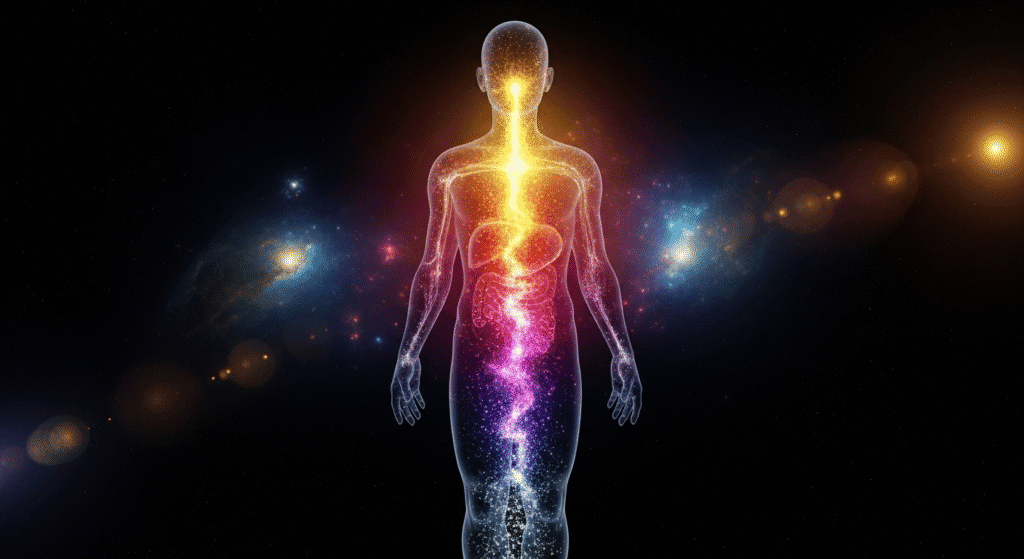
Let’s consider a hypothesis. A person wishes for eternal life. To achieve this goal, there are two scenarios. One is to keep their body forever young and healthy, free from aging and disease. Theoretically, barring fatal accidents, one could live forever. This is a primary focus of current research into extending lifespan and achieving immortality. However, if the human physical body cannot be preserved, if aging and disease are inevitable, leading ultimately to decay, there is perhaps another scenario for achieving eternal life: transferring our consciousness to another body. This could be the healthy body of another person or an artificial mechanical body, concepts explored in numerous works of science fiction. If we set aside ethical considerations, it is likely that many would favor such a solution, as it would allow them to choose a better-looking or stronger body, granting them abilities unattainable in their original form, and offering a whole new kind of experience.
From this perspective, my essence should refer to my consciousness, or rather, my consciousness is closer to my essence than my body is. The body is merely a vessel for consciousness. To narrow it down further, my definition should refer to my consciousness, and not include the body.
However, is my consciousness, truly me?
To this day, at least within the mainstream consensus, humanity’s knowledge of its own consciousness remains scant. Our understanding of the external world far surpasses our understanding of ourselves. How do we define my existence? This is a question many have tried to answer. But because they have never been able to find that true “I,” they have resorted to defining me by the many attributes attached to me. Our consciousness is filled with a vast array of content: our memories, our thoughts, our personalities and tempers, and our feelings. Although I do not know what “I” am, these various contents belonging to me are intimately connected with me, even shaping the person I appear to be. Thus, intuitively, we choose to use this content to define me.
Many people like to use memory to define their existence because memory is an easy tool for identity affirmation, positioning our role in society. But let us not forget the essence of memory. Memory is merely information. By basic common sense, I should not be just some information or cold data; a hard drive filled with vast amounts of information does not seem more alive than a bacterium. A data center, though storing immense information, is still just a pile of machines, not a living being, and certainly not a person. Furthermore, suppose I am in a car accident and wake up in a hospital a few days later, having completely lost my past memories. If my existence is defined by memory, does that mean I have died? If I have died, then who is this person who has awakened in the hospital?
As for those who choose to define themselves by their personality, feelings, and emotions, this type of definition is equally problematic. Our personalities are primarily shaped by our postnatal environment and frequently change with life experiences. A person’s personality in childhood, adulthood, and old age is often different. Do these three stages of “me” cease to be the same person because of these personality differences?
Similarly, our feelings toward others or certain things are also constantly changing. Feelings can be established and can fade; love can turn to hate, and hate to love. Feelings are mutable. Do we become a different person because of a change in our feelings? Moreover, feelings are dependent on connections with other things. If a certain external object does not exist, then neither does the feeling. Clearly, my existence should not be determined by some external object. Feelings cannot be used to define me.
Emotions are like a gust of wind in consciousness. They arise from certain informational stimuli, are perceived, and affect us, even dominating our behavior to some extent. But they seem to be a suddenly emerging force, blind and uncontrollable. Emotions can arise and disappear within minutes, or even shorter periods, or undergo multiple shifts. Clearly, emotions are even less suitable for defining my existence.
The things mentioned above, used to define me, seem more like attributes and traits attached to me. They may form, change, and disappear, making my external appearance seem different. They are like the planks, mast, and ropes on the Ship of Theseus, constantly being altered or even replaced during our life’s journey, plunging us into the same identity crisis.
However, beneath all these ever-changing, peeling layers of attributes and traits, there must be a true “I” wrapped in the deepest core. The essence of this “I” should be constant and unique, like an axis running through the entire course of life, defining the perpetual existence of “me as me.”
Why the Paradox of the Ship of Theseus Remains Unsolved。
The answer, perhaps cruelly, is unacceptable to many: because it was a problem destined to be unsolvable from the start.
Its insolubility stems not from a lack of our wisdom, but from a fundamental flaw in the experiment itself. The traditional Ship of Theseus, as a composite entity made entirely of changeable parts, does not possess an objective, intrinsic, essential core. Therefore, any attempt to find a single, “correct” identity for it is doomed to get stuck in the mire of subjective definition. Nominalism, materialism, and process theory are all but attempts to measure a void with a subjective ruler.
We can never deduce an objective answer from a subjective question.
Therefore, if we wish to obtain an objective answer, we must radically alter the problem itself. We need to instill in this ship something it has never possessed—an eternal, immortal soul.
Let us upgrade this legendary warship into an ultramodern, intelligent vessel controlled by an AI system. Inside the ship is a very special intelligent core, which is also the core of the entire intelligent system. This core, from the moment of its creation, will never change; it is eternal, immutable, and indivisible. This core is the true source of the Ship of Theseus.
At this point, the paradox is resolved.
No matter how we replace the ship’s parts, even if we replace the entire hull, as long as that source core remains, it is still the Ship of Theseus. But once this core is replaced, even if it’s the only thing replaced, the ship is no longer itself. We could even dismantle all the ship’s parts, one by one; as long as the core remains, the Ship of Theseus still exists, even if it no longer appears in the form of a ship. In this upgraded thought experiment, we can finally obtain an objective, certain answer, because this version of the ship has a definite, unique, unchangeable, and indivisible source. Where this source is, there is the Ship of Theseus.
When an existence is objectively determined, it must be unique, unchangeable, and indivisible; otherwise, the identity trap of the Ship of Theseus will reappear, destroying the objectivity of its existence. All other things attached to it—its form, its parts, its name—are but changeable decorations that do not affect its inner, true source of being.
Likewise, within each person, the name, status, memory, and emotions are merely “parts” that can be replaced, attached to some immutable source.
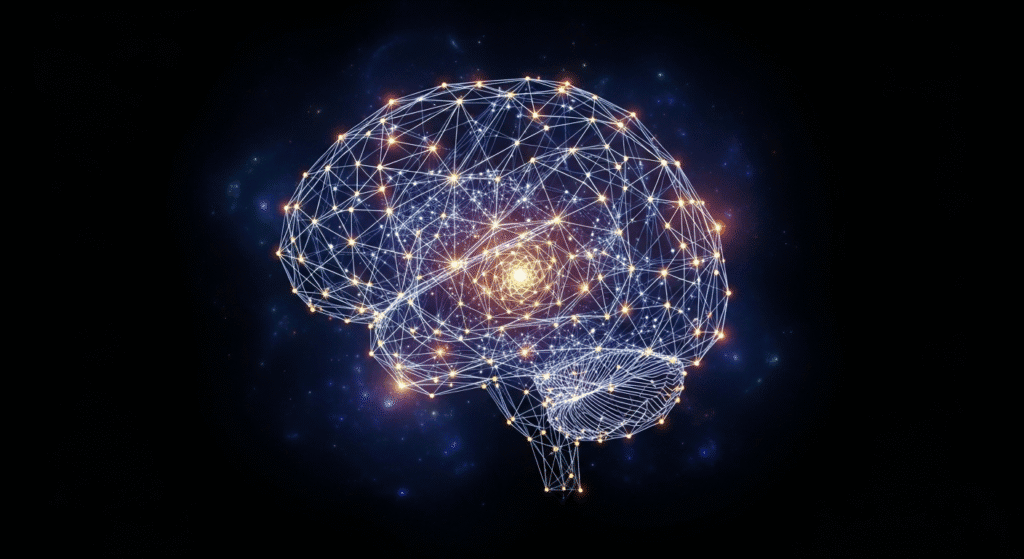
This leads us to the final, and most unsettling, key question: Within our own “Ship of Theseus,” does such an immortal “intelligent core” also exist? A definite, unique source that represents our own true being?
If it exists—what is it? Is it the immortal “soul” sought by sages and saints throughout the ages? Why, in our daily experience, can we only see the ever-changing “planks,” yet never truly perceive this eternal “captain”?
And if it does not exist—then, in objective reality, have “we” ever truly existed at all?
To explore how these principles of consciousness apply to transformative practices, read my in-depth guide: The Truth About Meditation That No One Tells You.
The Inquiry Continues… In the Book.
This essay explores a single facet of a much larger, interconnected system. It is the tip of the iceberg.
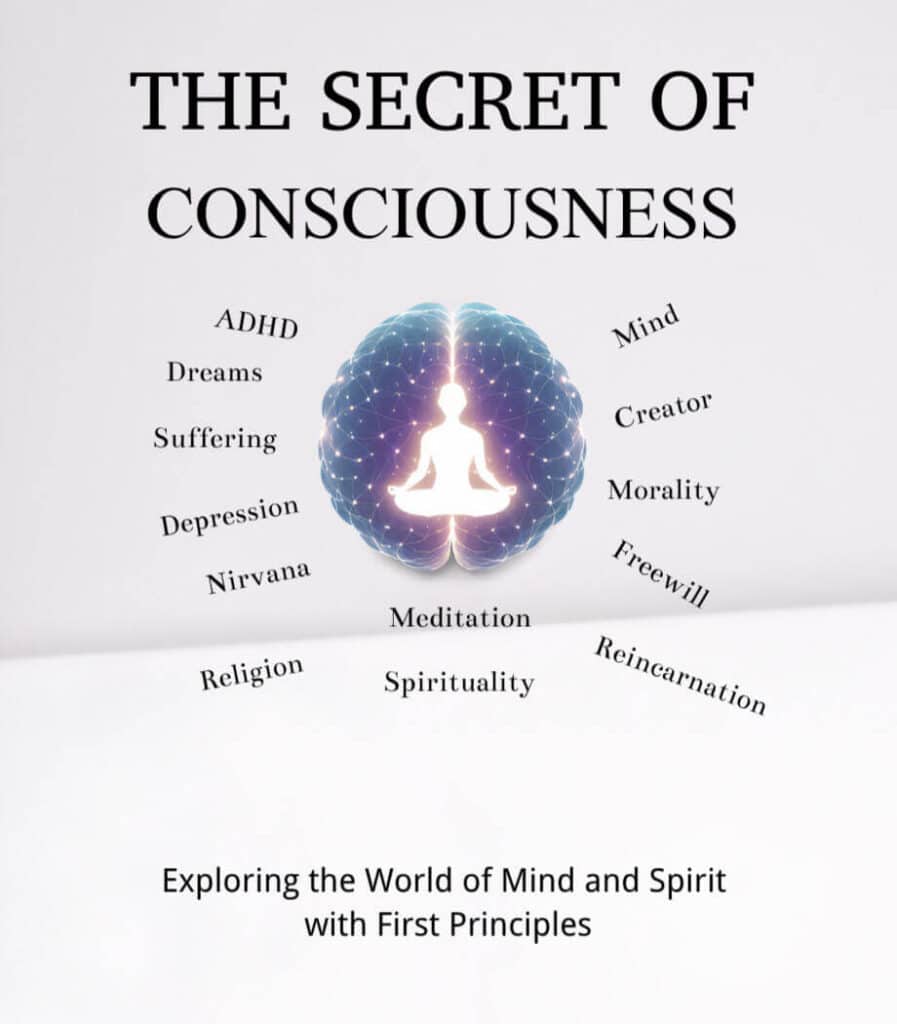
The full 449-page framework of my book, “The Secret of Consciousness,”*reveals the entire structure beneath—the foundational principles that connect all these ideas into a single, cohesive whole. If you are ready to see the complete picture, your journey starts here.
Overcomplicated. What you suggested is essentially just “The ship sailed by Theseus is the Ship of Theseus. If he’s deceased, then the ship is no longer SoT. If he sails another ship, that ship becomes SoT.” No need to introduce AI.