
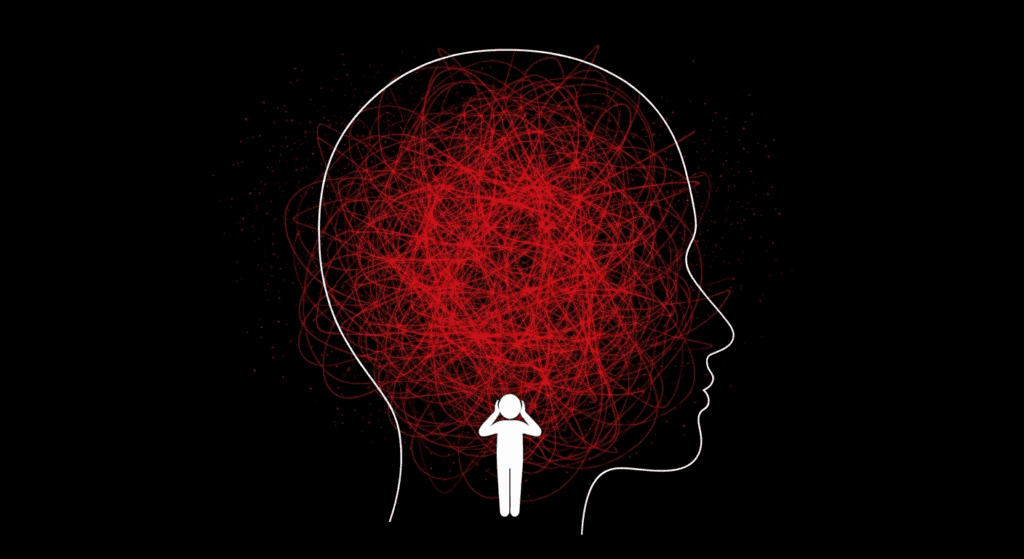
What is the real Truth About ADHD? Is it merely a deficit, or a misunderstood superpower? In this deep dive, we use the first principles of consciousness to uncover the reality behind the diagnosis.
I. The Logical Paradox Behind the Phenomenon
From the perspective of modern psychiatry and psychology, ADHD (Attention Deficit Hyperactivity Disorder) is widely defined as a neurodevelopmental disorder. Its core diagnostic criteria include inattention, hyperactivity, and impulsivity. This definition implies a premise: the patient’s brain suffers from some kind of “functional loss” or “deficit.”
However, if we observe the actual behavioral performance of individuals with ADHD closely, we find a paradox that the “deficit theory” cannot explain:
A child or adult judged to be “unable to focus” indeed shows extreme distractibility when facing boring classrooms or work. Yet, when facing video games, high-stimulation entertainment, or specific fields they are interested in, they can exhibit a state of “Hyperfocus” that is beyond the reach of ordinary people. They can maintain high-intensity focus for hours or even more than ten hours, forgetting to eat or sleep, and oblivious to their surroundings.
If the “attention deficit” is real—meaning the brain lacks the ability to maintain focus—where does this “super attention” come from? How can a braking system that is “broken” perform better than a normal vehicle at certain times? This is logically contradictory.
To solve this puzzle, we cannot stop at the description of surface symptoms. We must go deep into the bottom layer and dissect the operating system of human consciousness. We need to figure out: What is consciousness? What is attention? And how does our brain actually operate?
II. The Truth About ADHD: The Underlying Mechanism of Consciousness
To understand ADHD, we must first establish a basic cognition: Our consciousness is not a single, indivisible whole. Human consciousness is essentially composed of two distinct parts that cooperate with yet oppose each other:
1. The Mind System (Non-Self Consciousness)
This is an extremely massive, complex system composed of countless automatically running programs. It contains our sensory processing systems, physiological systems that maintain life, memory banks that store experience, and mechanisms for emotional and thought reactions generated automatically based on this information.
Its essence is algorithms. Like a tireless supercomputer, it automatically processes massive amounts of information and outputs behavioral instructions every moment based on preset genetic codes (instincts) and acquired experiences.
It is the concrete executor. All our thinking activities, emotional reactions, and even physical movements are carried out by the Mind System at the execution level. The Mind System occupies all areas of the brain except the prefrontal cortex.
2. True Self Consciousness
This is the special existence that allows us to be aware of our own existence; it is the subject of perception. The fact that we can realize our own existence and perceive various information originates from its presence. It is also the source of our rationality; it is the real “me.”
Physiologically, it corresponds to the prefrontal cortex area of the brain. True Self Consciousness does not generate any information, nor does it generate specific behaviors.
True Self Consciousness can influence and control the Mind System, and conversely, the Mind System can also influence and control True Self Consciousness. Theoretically, the ideal state should be True Self Consciousness dominating and controlling the Mind System, but the reality is often the opposite: the vast majority of people are influenced and controlled by the Mind System.
To fully grasp the Truth About ADHD, we must realize that its core symptoms are manifested in attention, we first need to understand the operating mechanism of attention.
III. The Mechanism of Attention: Two Distinct Modes of Focus
When we focus on observing an object or doing a task, we are calling upon the energy and resources of our consciousness. But there is a key question: Who decides what we should focus on?
Since both True Self Consciousness and the Mind System have decision-making capabilities, the decisions of these two different consciousnesses lead to two different modes of focus.
1. Focus Driven by the Mind System
The Mind System is a ceaseless, automatically running information processing system that has a strong craving for information. However, its demand for information is selective. It chases certain information, showing interest and desire; at the same time, it repels and resists other information. If you feel that something is dry and boring, it means your Mind System is rejecting it.
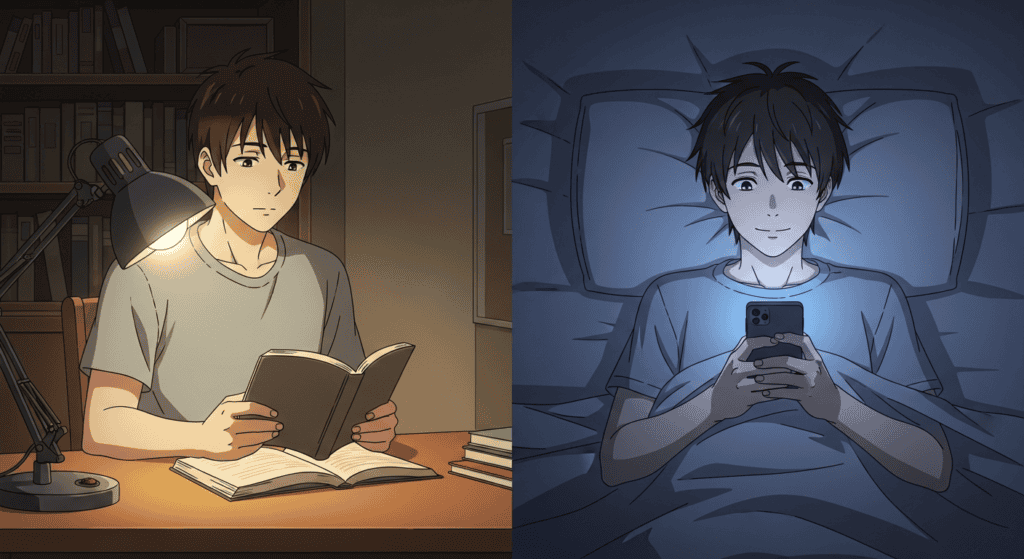
Focus driven by the Mind System is based on interest/desire. When facing “high stimulation, high interest, high feedback” things (such as games, short videos, or personal obsessions), the “preference algorithm” inside the Mind System is activated. The system judges: “This information brings a pleasant feeling (dopamine), and it has extremely high weight!” Thus, the Mind System automatically and actively mobilizes all computing resources to invest in it.
In this mode, you don’t need to make any effort to enter a state of focus. Because the Mind System is an automatic system, you are instead pulled or even swept up by it, entering a state of selfless immersion. This is a bottom-up, passive focus.
2. Focus Driven by True Self Consciousness
This is a state where True Self Consciousness is deeply involved, or even dominant. It often happens when people, after making a rational value judgment, choose to focus on something that is not very interesting but has actual value.
For example, you need to complete a boring report, or learn an obscure language for a long-term goal. For the Mind System, these tasks are dull and uninteresting; they cannot elicit the active cooperation of the Mind System and may even trigger resistance and rejection. At this time, True Self Consciousness must intervene. It needs to use its control over the Mind System to suppress the Mind System’s resistance, forcibly anchor the focus of attention to the target, and screen out other interferences.
This is a top-down, conscious focus that requires active control and maintenance.
The Crux of ADHD:
Once we have a certain understanding of consciousness and attention mechanisms, and then observe the various symptoms displayed by ADHD patients, it is easy to judge where the root of ADHD symptoms lies. What is the core symptom of ADHD? It is that ADHD patients find it difficult to control their own attention.
This does not mean that ADHD patients cannot enter a state of focus. When they encounter things they are very interested in, they easily enter a state of focus, even to the point of selflessness. It is only when facing uninteresting tasks that require conscious control of their attention to complete that it becomes extremely difficult.
It can be seen that compared with ordinary people, the focus mode of ADHD patients tends more towards the Mind System-driven mode. That is, their Mind System is more active than that of ordinary people, and a more active Mind System exerts greater influence and suppression on True Self Consciousness.
Therefore, theoretically speaking, at the physiological level, the prefrontal cortex of ADHD patients (the location of True Self Consciousness) is weaker than that of ordinary people; meanwhile, other areas of the brain where the Mind System resides are significantly more active. Modern scientific research on the brains of ADHD patients perfectly verifies this point.
When we need to show self-control and consciously focus on completing valuable but uninteresting tasks, we need True Self Consciousness to control the Mind System. However, since these tasks are not interesting and do not get the cooperation of the Mind System—or are even rejected by it—this requires a stronger True Self Consciousness and a more controllable (less active) Mind System to achieve.
For ADHD patients, their True Self Consciousness is weaker, and their Mind System is overly active. This is like a weak rider trying to hold back a startled wild horse. The rider (True Self) will soon be exhausted, the reins will slip, and attention will collapse and scatter. This manifests as the “inability to focus” we see in schools and workplaces.
Conclusion: ADHD patients do not lack attention; they have lost the autonomous right to choose their attention. They can only be passively driven by the preferences of the Mind System, unable to use True Self Consciousness to harness it.
IV. Deep Analysis of Symptoms: Hyperactivity, Impulsivity, and Boredom
Based on the model of “Active Mind System vs. Weak True Self Consciousness,” the three core symptoms of ADHD—hyperactivity, impulsivity, and extreme intolerance of boredom—are perfectly explained logically.
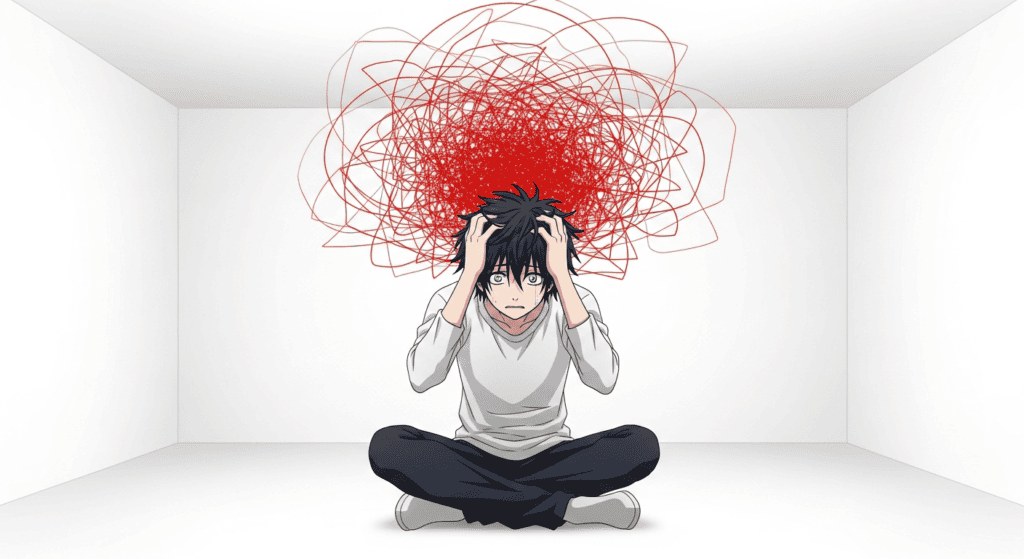
1. The Essence of Hyperactivity: Energy Overflow
The Mind System is a high-speed information processor. For individuals with ADHD, the “basal metabolic rate” of this system is extremely high, generating massive amounts of information and energy every second. When the body is restricted to a static state (such as sitting in a classroom), and the brain is not engaged in high-intensity cognitive activities to consume this energy, the Mind System feels “congested.” To release this redundant energy, it automatically sends instructions to the body: shaking legs, spinning pens, walking around. This hyperactivity is not a “bad habit,” but the system’s “spontaneous regulation mechanism” aiming to maintain the operational momentum and energy balance.
2. The Essence of Impulsivity: Failure of the Audit Mechanism
In normal consciousness operations, when a stimulus enters from the outside (e.g., someone says something provocative), the Mind System instantly generates a reaction program (e.g., anger and the impulse to fight back). Before converting into actual action, this program usually needs to pass through the Perception and Audit of True Self Consciousness (prefrontal cortex).
True Self Consciousness has a very short time window to exercise its “Veto Power” and intercept this impulse. But for individuals with ADHD, because the Mind System generates impulses too fast and too strongly, and the awareness capability of True Self Consciousness lags, the impulse bypasses the audit and converts directly into behavior. This “direct connection” mode makes them appear to lack self-control.
3. The Essence of Boredom: The System’s Panic over Entropy
The experience individuals with ADHD find most unbearable is “boredom.” For them, this is not just dullness; it is almost a physiological torture and pain. Why? This involves the physical property of the Mind System—Entropy.
As a complex system, the Mind System naturally tends towards order. When there is enough information input (high stimulation), the system runs at full speed to process information and is in an orderly state of flow (Low Entropy). Once external stimulation disappears (such as a quiet environment, a boring task), and information input is insufficient, the active Mind System loses its processing object, and its interior begins to tend towards “Chaos/Disorder” (Entropy Increase). Countless idle sub-programs begin to pass through randomly, generating a lot of noise (distracting thoughts) and restlessness.
This “disorder” is judged by the system’s underlying logic as a “threat.” Therefore, the system manufactures severe pain (anxiety, discomfort, drowsiness) to coerce True Self Consciousness into finding new sources of stimulation. This is why ADHD patients must constantly swipe their phones, talk to people, or cause trouble—they are not messing around; they are desperately looking for information fodder to escape boredom and feed that huge, high-speed Mind System.
Talent and Risk: From Genius to Mediocrity
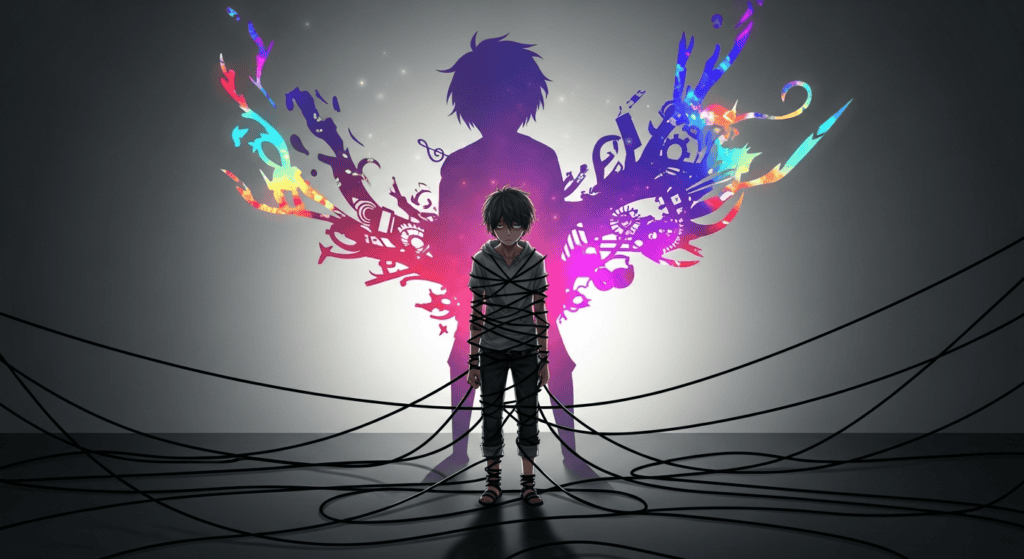
The Mind System is responsible for various information processing. A highly active Mind System means stronger information processing capabilities. This powerful capability makes many ADHD patients appear smarter than ordinary people, and they even have talents far beyond ordinary people in certain fields. Looking back at human history, many outstanding geniuses possessed typical ADHD traits. Their great achievements were largely due to the super information processing capabilities endowed by that high-speed Mind System.
However, the “smart” traits displayed by ADHD patients are mostly reflected in the childhood stage. Many ADHD patients who looked very smart when they were young appear mediocre or even inferior to ordinary people when they grow up.
This is because the Mind System gradually generates new programs in the process of processing information. With the accumulation of time, the Mind System easily becomes bloated and disordered. For ADHD patients with naturally active Mind Systems, this problem is particularly severe.
Many adult ADHD patients still possess the high computing power of the Mind System, but because there are too many “garbage programs” (negative loops, traumas, conflicting beliefs) accumulated inside, the system becomes extremely chaotic and difficult to control.
They often find it hard to discover things that interest them; their talent fades, and they become ordinary. Coupled with their inherent lack of self-control, their performance in daily life is even worse than that of ordinary people. Only a very few who can maintain their interest in their careers for a long time are likely to succeed.
A Worse Outcome: Moving Towards Depression
When the active Mind System of an ADHD patient falls into excessive chaos and disorder, it becomes difficult to find things that interest them or bring happiness. At this time, the Mind System turns to manufacturing various negative emotions to maintain its own orderliness (a twisted form of order), making them more prone to internal friction and depressive moods.
Therefore, theoretically speaking, the probability of ADHD patients suffering from depression is much higher than that of ordinary people, and research in reality has confirmed this.
Furthermore, depression in ADHD patients is much more severe than in ordinary people. Ordinary depression is mostly caused by major setbacks in life; once the problem is solved or the mindset is adjusted, one can walk out of depression. However, depression in ADHD patients stems from their own terrible state of consciousness (systemic internal friction). They need to repair their state of consciousness to walk out of depression, which is much more difficult to achieve.
V. The Solution: Repairing the State of Consciousness from the Root
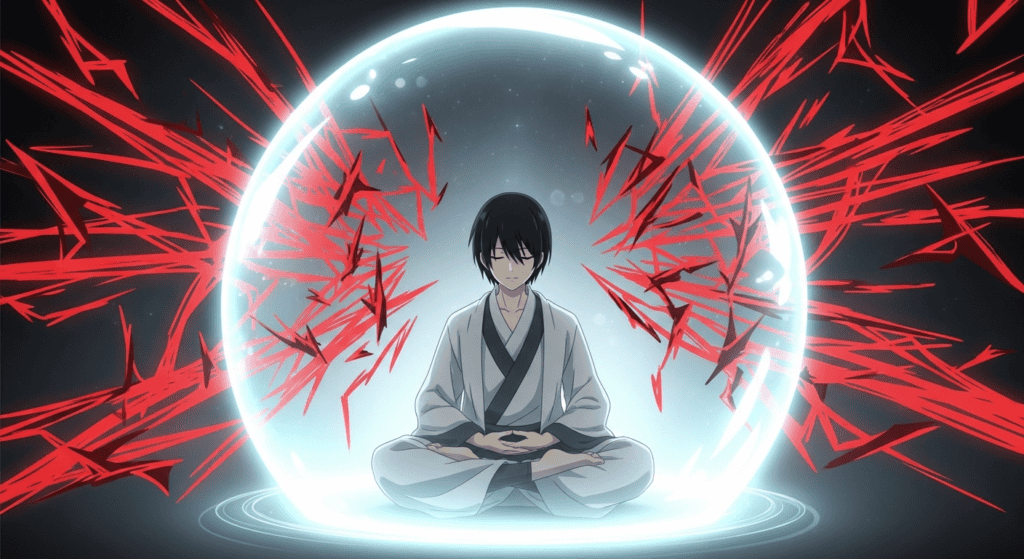
Modern medicine uses central nervous system stimulants (such as Ritalin) to treat ADHD. The pharmacological mechanism of these drugs is to increase the concentration of neurotransmitters in the prefrontal cortex. This is equivalent to injecting a stimulant into the weak True Self Consciousness, giving it the temporary strength to suppress the Mind System. This is indeed effective, but it is exogenous and temporary.
To solve the problem fundamentally, one must carry out the restructuring of the state of consciousness. The key to restructuring lies in training your consciousness just like training muscles. This consciousness training is Meditation.
Meditation does not refer to a specific training method, but a collective term for a series of consciousness training methods. Effective meditation methods are designed based on the operating mechanism of consciousness.
For example, in meditation practice, the most classic method is watching the breath. Watching the breath is quite boring for ADHD patients, so it must be a task dominated by True Self Consciousness. Watching the breath looks simple, but it is difficult to do. It requires True Self Consciousness to have strong control over the Mind System, and at the same time, the Mind System needs to be in a state of low activity to reduce the interference of various thoughts in the mind—these are conditions that ADHD patients do not possess.
Although meditation practice can solve various problems of ADHD from the root, the state of consciousness of ADHD patients makes the difficulties they encounter in meditation practice much greater than those of ordinary people. It is like asking a weak rider to tame a violent wild horse.
Therefore, when ADHD patients practice meditation, they need more patience and perseverance, but this is exactly what they lack. Many ADHD patients choose to give up after a short attempt, finding they cannot enter the state.
It is not that meditation cannot solve their problems, it is just that the difficulty of their practice is much higher than that of ordinary people.
There is a pragmatic method to bridge this gap: utilize ADHD medication as a temporary aid and practice meditation during the effective period of the drug. This can greatly reduce the difficulty of practice, using the window provided by the drug to truly strengthen True Self Consciousness. This is the ultimate path to discovering the Truth About ADHD., eventually enabling you to control the system without external aids.